Home/Costs
What a Septic System Really Costs in Comal County (2026)
Short version: for most of Comal County, a new septic system is a $13,000 to $22,000 project, not the $3,700 to $5,400 the national directories quote. Here is where every dollar of that goes, and what moves your number up or down.
Why the national estimates are wrong here
Directory sites build their averages from projects across the whole country, where a conventional septic system (tank plus gravity drainfield) is the normal case. HomeYou, for instance, publishes a New Braunfels average of $3,762 to $5,374 based on completed projects. That is a real number for a conventional system. It is the wrong number for most properties in this county.
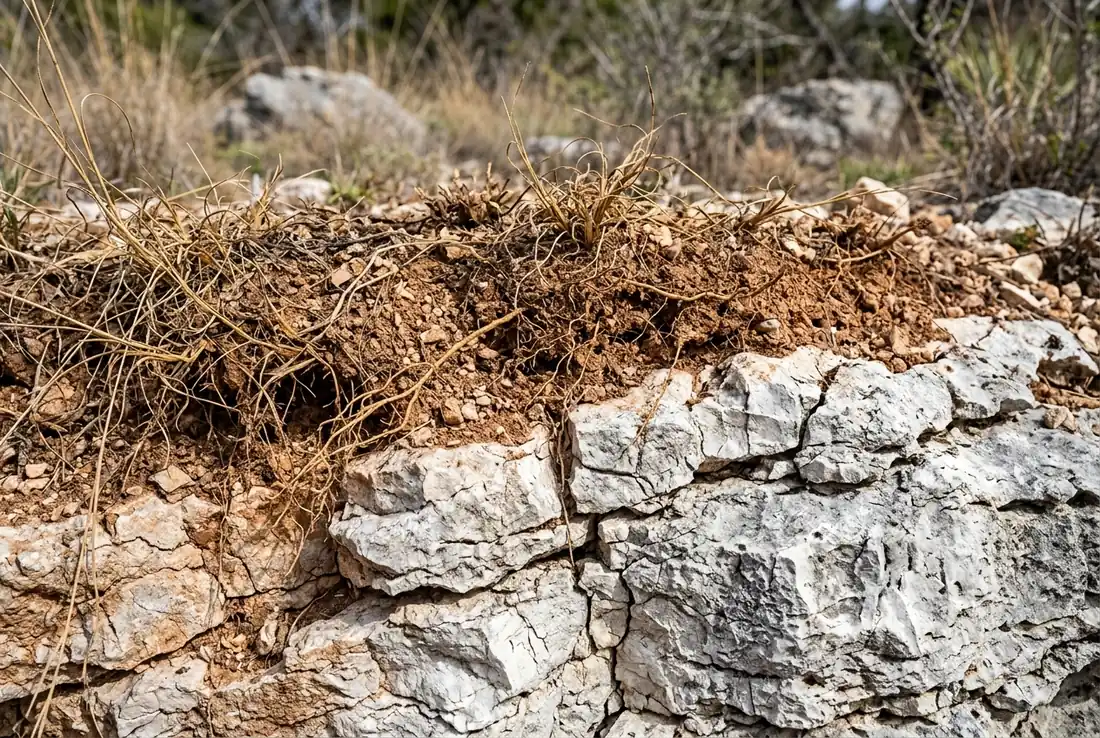
A gravity drainfield needs soil that will absorb and filter effluent. Much of the Hill Country has a thin soil layer over fractured limestone, which drains too fast to treat anything: the reason the rules protecting the Edwards Aquifer exist in the first place. On those lots the answer is an aerobic treatment unit, which treats wastewater mechanically and then disperses it through spray heads or drip lines. Different machine, different price.
Not "what does septic cost in New Braunfels"; it is "what will my soil accept." A licensed site evaluator answers that with a soil test and a site survey, and that answer sets everything downstream: system type, sizing, layout, and price. Get local pros to quote the evaluation →
2026 cost ranges for this region
| Scenario | Typical range |
|---|---|
| Aerobic system, Hill Country lot (limestone + Edwards Aquifer restrictions) | $13,000 – $22,000 |
| Aerobic system, standard 3-bedroom, easier rural ground | $11,000 – $13,000 |
| Well and septic together, unincorporated Comal County | $8,000 – $15,000 |
| Conventional system, where soil genuinely permits one | Lower, but uncommon locally |
Line by line: what you are paying for
| Component | Cost | Why it varies |
|---|---|---|
| Aerobic treatment unit (the tank itself) | $4,000 – $8,000 | The single biggest driver. Sized to bedroom count and daily flow. |
| Distribution: spray heads or drip irrigation | $2,000 – $5,000 | Drip costs more than spray but suits small, sloped or heavily used lots. |
| Rock trenching | $2,000 – $5,000 | Common in the Hill Country. Depends on how shallow the limestone is. |
| Specialised excavation on rocky terrain | $1,500 – $4,500 | Slope, access for equipment, and how much material has to be moved. |
| Control panel and alarms | $500 – $1,000 | Panels with electronic monitoring cost more but halve required inspections. |
| Electrical hookup | $300 – $800 | Distance from the panel to the system, and whether a trench is needed. |
| Site and soil evaluation | Varies: quote it | Required before anything else. Must be done by a qualified site evaluator. |
| Planning materials / system design | Varies: quote it | On the Recharge Zone, a PE or professional sanitarian must file them. |
| County permit fee | Per county schedule | Confirm the current amount with the Comal County Engineer's Office. |
| Reinspection fee, if a system fails | $150 | Avoidable. Charged when one of the three inspections does not pass. |
A control panel with electronic monitoring that tracks failures and disinfection levels cuts your required maintenance inspections from three a year to two. Over the life of the system that is a real saving against a modest up-front premium: worth pricing both ways. See maintenance contracts.
The cost nobody budgets for
An aerobic system is not a one-time purchase. Texas Health & Safety Code 366.0515 requires every aerobic system owner to keep an active maintenance contract with a TCEQ-licensed provider, for as long as they own the system. Budget $200 to $500 a year; some providers quote $400 to $600 annually after the first year, which usually comes bundled with the install.
It is not optional and it is not a warranty upsell; it is state law, and non-compliance can draw fines of up to $100 per day. It also matters when you sell: a Texas transfer involving an aerobic system requires proof of a valid maintenance contract.
What actually moves your number
- Depth to limestone. The shallower the rock, the more trenching, and the more certain it is that a conventional system is off the table.
- Whether you are on the Edwards Aquifer Recharge Zone. That triggers a one-acre minimum per dwelling, setbacks of 50 feet from recharge features for tanks and 150 feet for soil absorption systems, and plans filed by an engineer or sanitarian. Full rules here.
- Bedroom count. Sizing follows projected daily flow, so a five-bedroom house needs a bigger, costlier system than a three-bedroom on the same lot.
- Slope and access. Steep Canyon Lake and Fischer lots cost more to work, and may force drip distribution over spray.
- Lot size and layout. Setbacks from wells, property lines, structures and recharge features can squeeze the usable area until only a more expensive design fits.
- Replacement versus new build. Replacements add demolition and decommissioning of the old system, but sometimes reuse existing infrastructure.
How to compare quotes without getting burned
- Get the site and soil evaluation done first, or at least confirm every bidder is pricing the same system type. Quotes for different systems are not comparable.
- Ask for the price itemised: tank, distribution, excavation and rock, electrical, panel, design, permit.
- Confirm licence class. Class I (OSI) installers may install standard systems only; Class II (OSII) may install all types, including aerobic units.
- Ask who is filing the planning materials. On the Recharge Zone it must be a professional engineer or professional sanitarian, not the installer.
- Ask what the maintenance contract costs after year one, and whether the panel includes electronic monitoring.
- Confirm the quote includes the permit and all three county inspections.
A licensed site evaluator has to answer that with a soil test; nobody can tell from a map. Send us your address and we will have local licensed pros quote the evaluation and the install. Request free quotes →
Cost questions
Why is my quote so much higher than the online estimate?
Because the online estimate is almost certainly pricing a conventional gravity drainfield, and your lot probably cannot take one. Comal County sits largely on shallow soil over limestone, so most properties need an aerobic treatment unit; a powered, permitted, professionally designed system that costs two to four times more.
What makes one quote different from another on the same property?
Mostly site conditions and system sizing, not margin. How much rock has to be trenched, how far the distribution field sits from the house, how many bedrooms the system must be sized for, whether the lot slopes, and whether spray or drip distribution is specified. Ask each bidder to itemise those and the differences usually explain themselves.
Does the county permit fee add much?
The permit fee is a small fraction of the project. The one fee worth avoiding is the $150 reinspection fee, charged when a system fails one of the three required installation inspections. Comal County publishes a current fee schedule: confirm the amount with the Engineer's Office rather than relying on any figure you read online, including ours.
Is financing available?
Many installers offer payment plans, and a replacement system sometimes qualifies for home-improvement financing. If the system is part of a new build, it usually rolls into construction financing. Ask each bidder directly: terms vary a lot.
Request free septic quotes
Licensed Comal County OSSF professionals will contact you directly. There is no charge and no obligation.